Temporary electrical distribution equipment bridges the operational gap between utility drop pedestals or stationary diesel generators and high-draw trade tools. A standard 120-volt residential wall outlet provides 15…
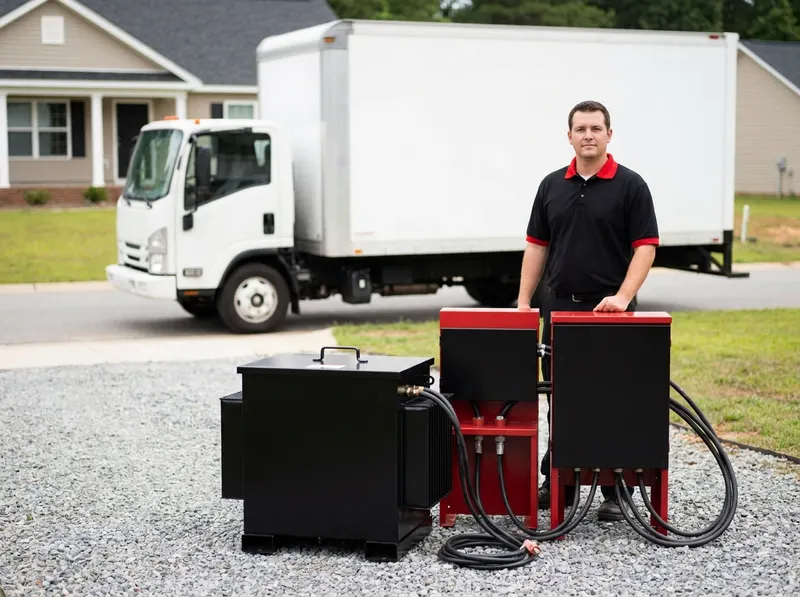
Temporary electrical distribution equipment bridges the operational gap between utility drop pedestals or stationary diesel generators and high-draw trade tools. A standard 120-volt residential wall outlet provides 15 to 20 amps, which trips under the continuous load of commercial floor polishers, industrial drying fans, or multiple framing crews running compressors. In contrast, portable 50-amp spider boxes take a 250-volt single-phase input and split it across six dedicated 20-amp GFCI duplex receptacles, keeping tools powered without nuisance tripping. For larger multi-crew sites near the Riverwalk commercial builds or major renovations along the Hickory Grove corridor, 100-amp to 200-amp main distribution panels establish centralized load centers that step voltage down cleanly. This service provides the physical gear only, it is not an electrical contracting service, so licensed local trades or certified technicians complete all panel terminations.
Selecting the correct equipment depends on total tool wattage and delivery distance rather than physical square footage. If a remodeling project in Oakwood Acres or Ebenezer requires running several heavy dehumidifiers and air scrubbers after pipe failure, a single 50-amp feeder line running to a NEMA 3R weather-rated spider box prevents voltage drop over a 100-foot run. If a property is staging a ground-up outbuilding build along Rawlinson Road or in Newport, a 100-amp distribution cart with cam-lock pass-throughs provides balanced circuit distribution for welders, masonry saws, and charging banks simultaneously. The primary operational trade-off centers on feeder cord weight and portability: flexible 50-amp SOOW cables allow fast repositioning across subfloors, while 100-amp and 200-amp heavy-gauge assemblies require rigid positioning, mechanical protection ramps, and pre-calculated layout paths to avoid vehicle damage.
Weather conditions in York County also dictate equipment selection. In outdoor settings near the Catawba River Greenway or open job lots in Sunset Point, humidity and storm runoff require strict NEMA-rated weather-resistant enclosures and built-in ground-fault circuit interrupter protection on every single-phase branch. 1. Calculate the total running wattage and peak surge amperage of all connected equipment. 2. Identify the power source connection, whether a 50-amp twist-lock generator receptacle, a direct-wire transfer switch, or a utility service drop. 3. Confirm the delivery site access and cord path clearings across driveways or mud trenches. 4. Inspect cable jackets and enclosure seals upon site delivery. Equipment rental orders include a strict $150 minimum fee covering inspection, testing, and standard local dispatch.
Every job gets a firm, written price after a free on-site visit.
Tell us about your electrical distribution equipment job in Rock Hill and we'll send a clear, written quote, usually the same day.
 JunkAway Dumpster Rental