Temporary cooling and heating equipment resolves building interior climate emergencies when central split systems fail during intense summer humidity or freezing winter snaps. In neighborhoods like Riverwalk and…
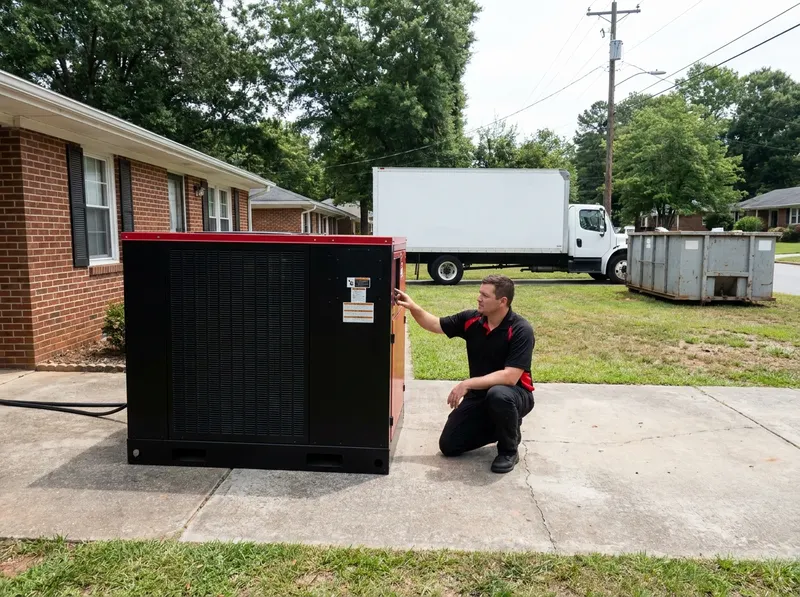
Temporary cooling and heating equipment resolves building interior climate emergencies when central split systems fail during intense summer humidity or freezing winter snaps. In neighborhoods like Riverwalk and Ebenezer, home renovations frequently require localized moisture extraction and supplemental cooling while ductwork is detached. Portable spot coolers ranging from 12,000 BTU (1-ton) up to 60,000 BTU (5-ton) provide direct airflow into specific work zones. A 1-ton spot cooler operates on a standard 115-volt, 15-amp or 20-amp household circuit, making it suitable for single-room preservation without electrical alterations. Larger 5-ton units require 208/230-volt single-phase or three-phase power, which fits commercial retail spaces along the Cherry Road corridor or active light-industrial job sites near the Rawlinson Road area.
Moisture control remains critical in crawlspaces and slab homes throughout the India Hook and Sunset Point areas along the Catawba River basin. Low Grain Refrigerant (LGR) dehumidifiers pull between 70 and 150 pints of water per day at standard AHAM testing conditions (80 degrees Fahrenheit and 60 percent relative humidity). Unlike residential department-store units that freeze up or shut off when reservoirs fill, commercial rental dehumidifiers feature internal purge pumps that route condensate through thirty-foot drain lines into existing plumbing or exterior ground drainage. If remediation teams in Oakwood Acres or Newport are drying subfloors after plumbing leaks, pairing an LGR dehumidifier with high-velocity centrifugal air movers drops structural moisture content below the 12 percent threshold required to prevent organic growth.
Selecting portable HVAC gear involves balancing available electrical supply against physical venting pathways. Spot coolers produce condenser exhaust heat that must vent outside the conditioned space through a ceiling plenum, a modified window panel, or a doorway baffle. An unvented spot cooler simply recirculates heat inside the room, resulting in a net increase in room temperature. For winter freeze protection in unconditioned garages or warehouse additions near the Hickory Grove corridor, electric fan-forced heaters avoid combustion fumes entirely, whereas high-output indirect-fired fuel units require exterior placement with ducting routed through a wall opening to eliminate carbon monoxide exposure inside occupied rooms.
Booking climate equipment follows a straightforward process: 1. Measure the cubic footage of the space and identify whether 115-volt 20-amp, 230-volt single-phase, or generator power is present. 2. Call (839) 343-0445 to schedule drop-off and duct configuration. 3. Local crews drop the hardware on-site, test amp draw at startup to avoid nuisance breaker trips, and walk through basic thermostat operation before leaving.
Every job gets a firm, written price after a free on-site visit.
Tell us about your hvac and climate control job in Rock Hill and we'll send a clear, written quote, usually the same day.
 JunkAway Dumpster Rental